Copy tag
Teach a brand to fish:
Why custom tools are becoming
the real deliverable
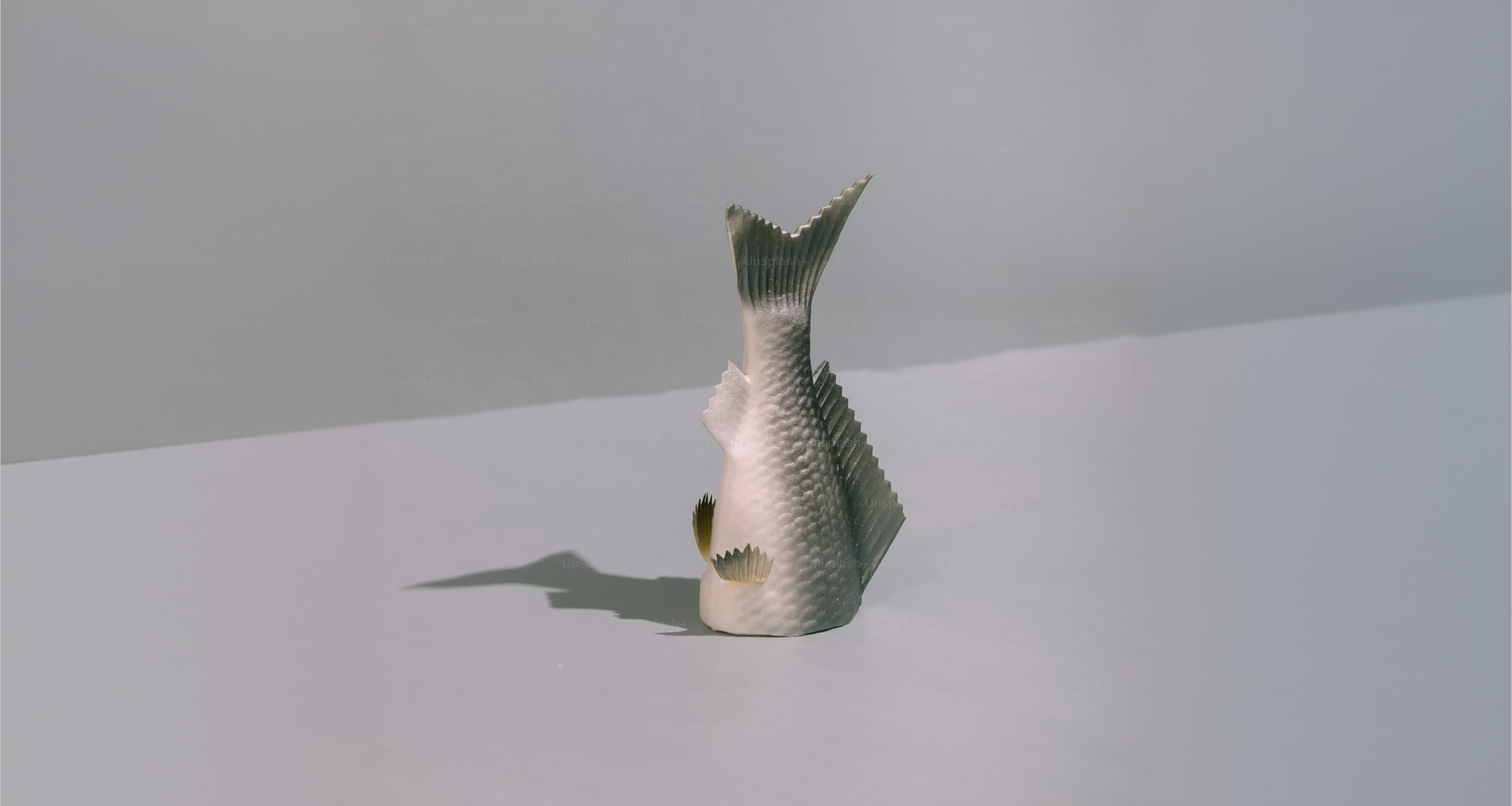
A custom brand tool is a piece of software, built in-house by a studio or with a specialist technical partner, that lets a client’s own team produce on-brand assets themselves, guided by their brand guidelines rather than replacing them. For organisations managing a brand across hundreds of people and touchpoints, that distinction is starting to matter more than almost anything else a studio can deliver.
There’s an old saying that’s had more airtime in boardrooms than design studios, but it fits: give a man a fish and you feed him for a day; teach him to fish and you feed him for life. Brand work has spent a long time in the business of handing over fish. A studio designs the asset, sends the file, the client uses it once, and comes back next time they need another one. It works, but it keeps the client dependent, and dependency isn’t really what good brand partnership should look like.
We think the better model is the second one. Not fewer fish. A rod.
Why guidelines still matter,
and why they’re not enough on their own
None of this works without strong guidelines. A guideline document is still the backbone of any brand: it’s the reference point, the rulebook, the thing that keeps a logo, a colour, a tone of voice recognisably itself, whether it’s used by a designer in the studio or a comms officer at 4pm on a Friday trying to get a poster out the door. Guidelines aren’t going anywhere, and any studio telling you otherwise is selling you something.
But a rulebook, on its own, doesn’t hand anyone a pen. It tells you what’s allowed. It doesn’t help you make the thing. For a small organisation with one brand touchpoint a month, that gap barely shows. For a large, multi-modal organisation with hundreds of people producing content every week, across rail, bus, walking and cycling, in two languages, at national scale, that gap is where consistency quietly breaks down.
That’s the space custom tools exist to fill. Guidelines set the rules. Tools let people play by them, quickly, confidently, without needing to ask permission first.
Case Study: Travel lines, built with Algo
When we built the multimodal brand system for Transport for Wales, one of its core visual devices was the Travel Line: a graphical element inspired by maps, where a gradient runs along a path to represent a journey. Rail, bus, walking and cycling each carry their own colour, and those lines stack, weave and animate to represent a joined-up national network in motion.
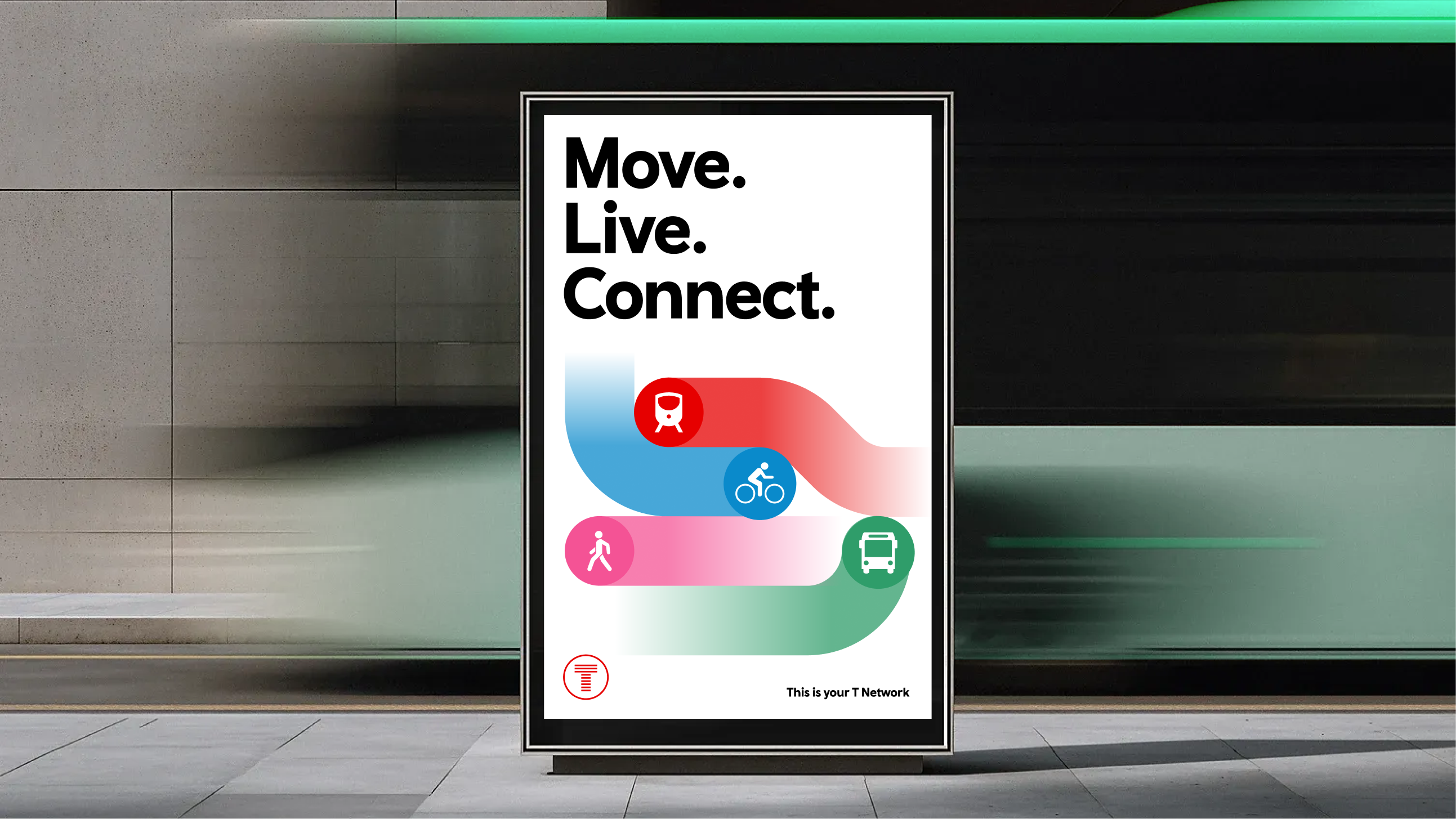
Paragraph about how the travel lines are complex and time consuming thing to replicate.
Lorem ipsum dolor sit amet consectetur. Nullam sit id at enim vel proin. Non ac tellus sem eu ipsum faucibus montes hac auctor. Diam urna maecenas interdum purus. Vel pharetra maecenas enim eget ut blandit ut. Elementum volutpat facilisis at duis accumsan velit feugiat. Diam urna maecenas interdum purus. Vel pharetra maecenas enim eget ut blandit ut. Elementum volutpat facilisis at duis accumsan velit feugiat.

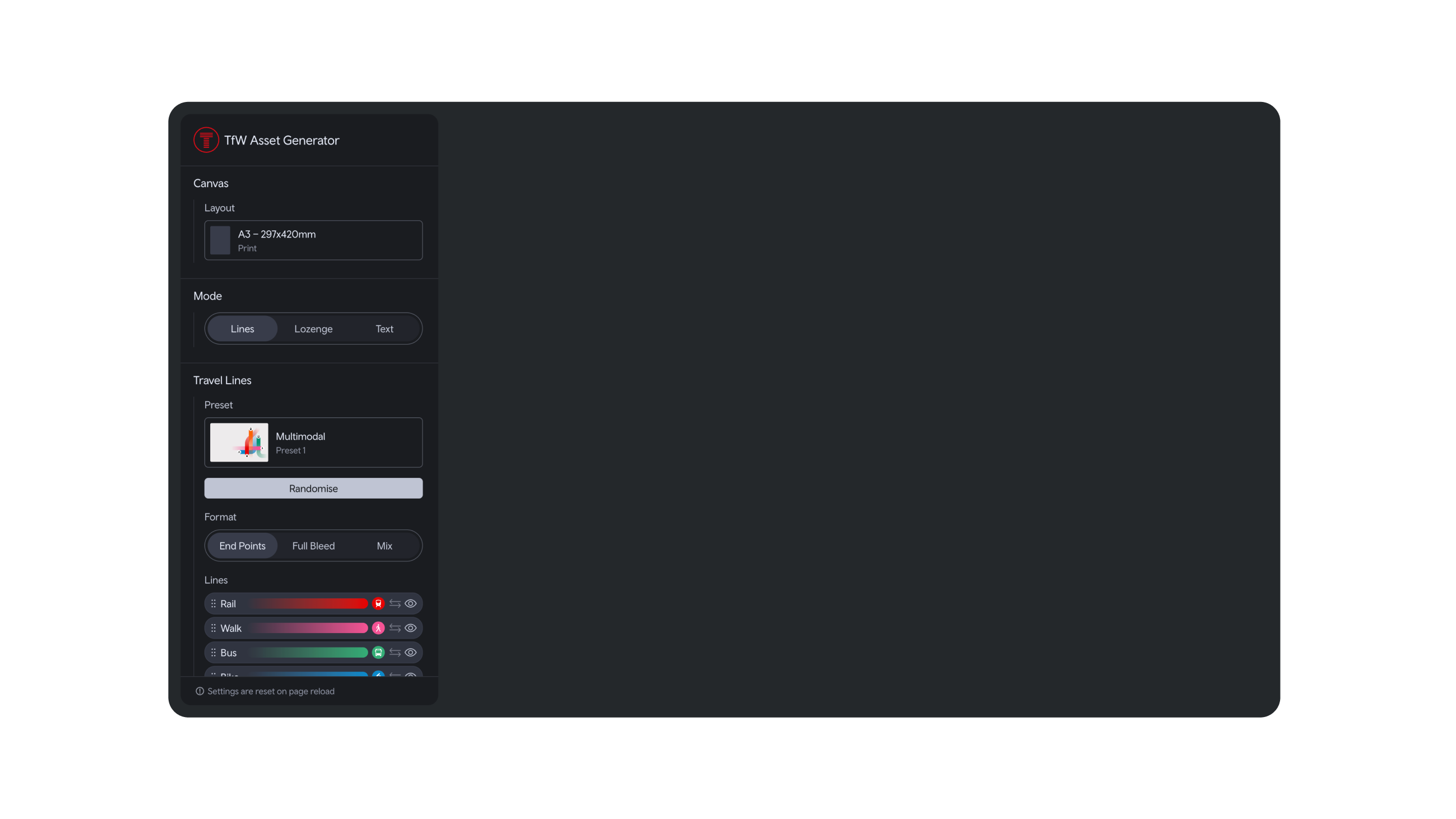
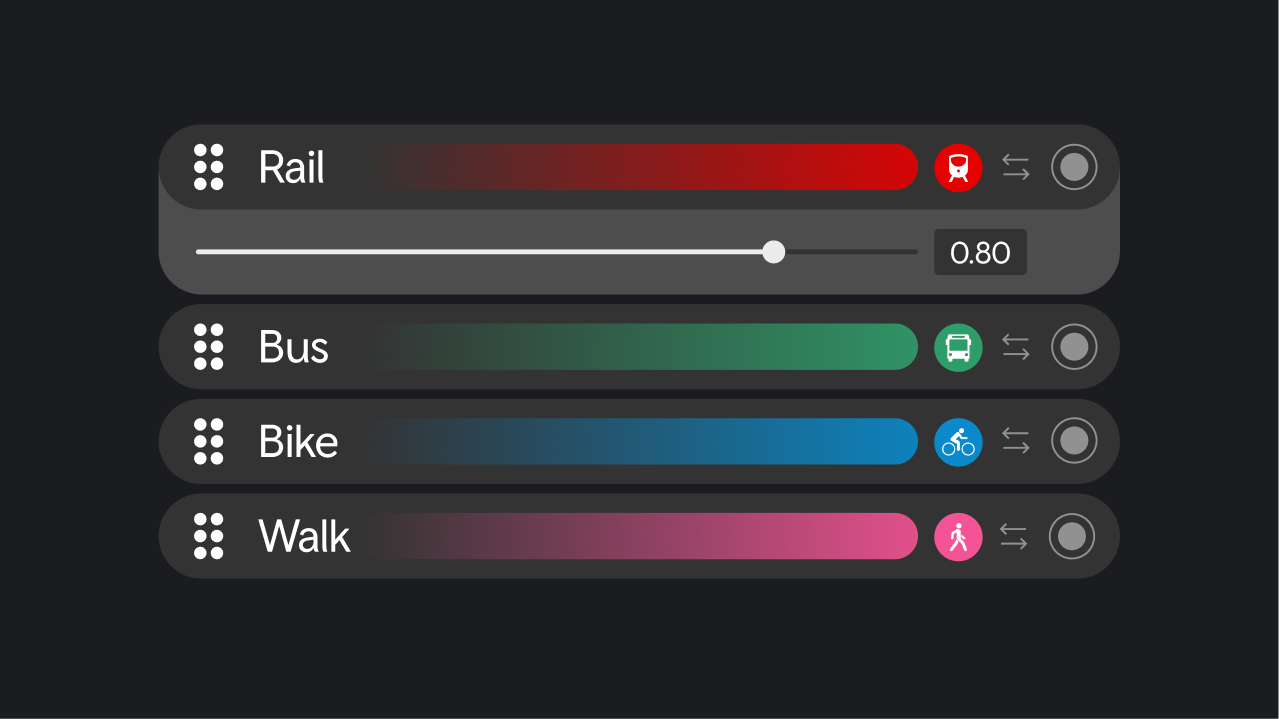
Details about the features of the custom tool.
Lorem ipsum dolor sit amet consectetur. Nullam sit id at enim vel proin. Non ac tellus sem eu ipsum faucibus montes hac auctor. Diam urna maecenas interdum purus. Vel pharetra maecenas enim eget ut blandit ut. Elementum volutpat facilisis at duis accumsan velit feugiat. Diam urna maecenas interdum purus. Vel pharetra maecenas enim eget ut blandit ut. Elementum volutpat facilisis at duis accumsan velit feugiat.

Case Study: The Woven Typewriter
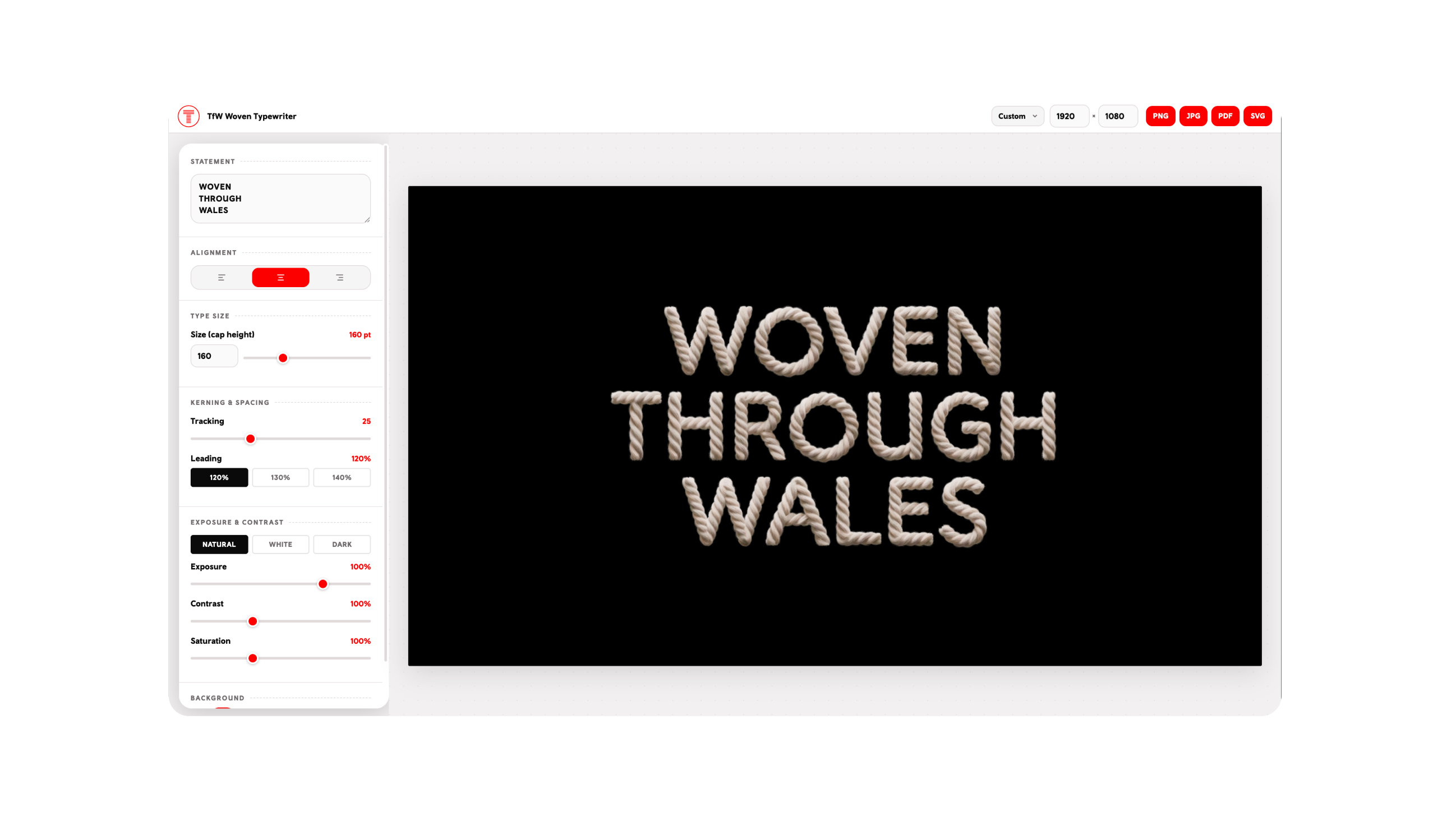
Transport for Wales recently launched their ‘Woven through Wales’ campaign, and came to us to create a display typeface to match it. We worked with Bomper to craft the face itself: a striking, woven design that needed to be scalable without losing its detail. Each letter was crafted individually as a PNG, which meant the real challenge sat in how it would be used day to day. Handed over as a set of static image files, dozens of individual letters are hard to apply consistently, with every campaign touchpoint at risk of drifting slightly from the last. So we built the Woven Typewriter, a tool to solve exactly that.
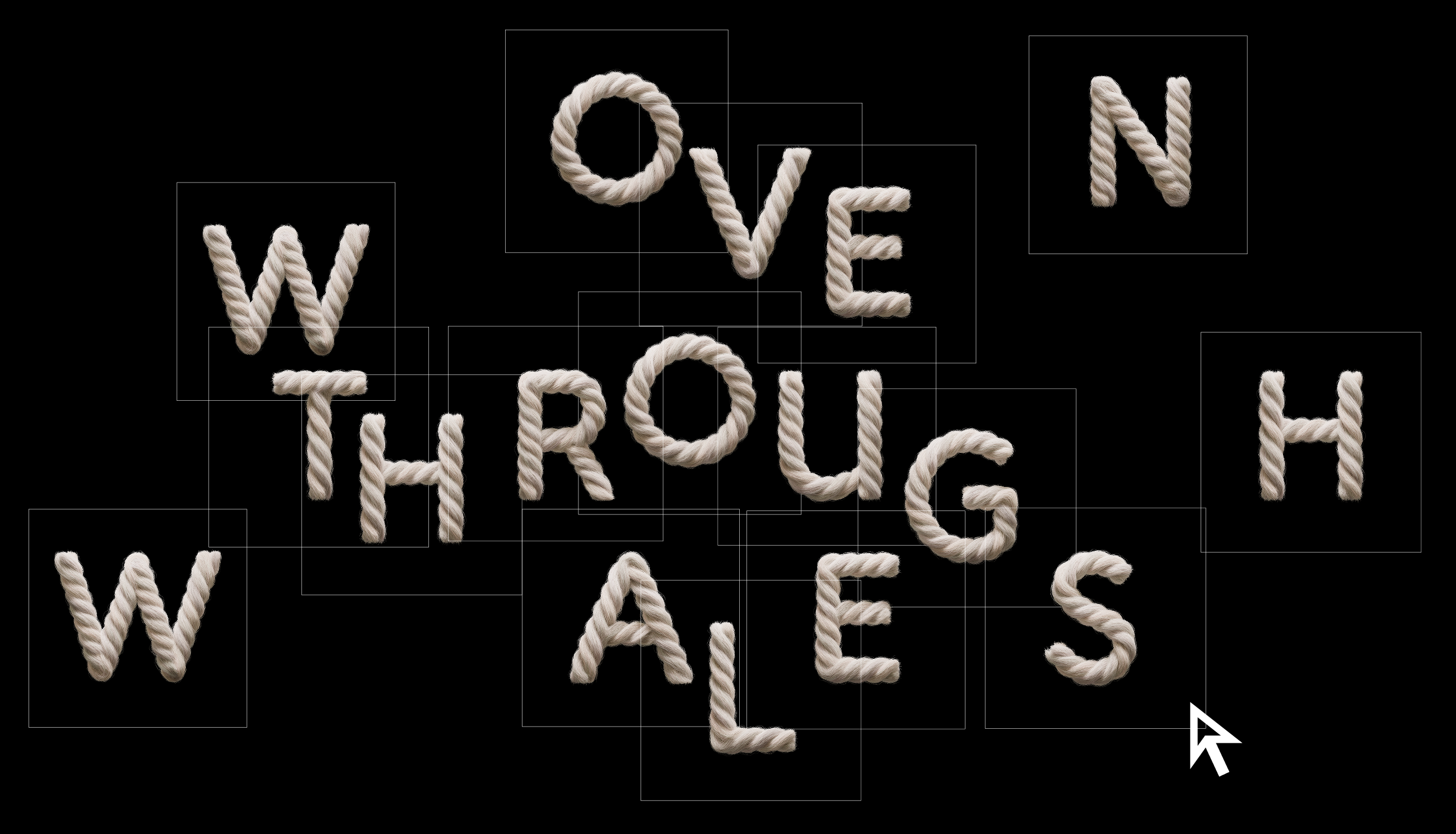
The Woven Typewriter takes that hand-crafted letterforms and turns it into something TfW’s internal teams can simply type into. Spacing, leading and kerning are all built into the tool itself, so every word renders correctly composed from the first keystroke, with none of the manual adjustment that comes with piecing together individual letters by hand.
The result is a tool that does the hard part invisibly, leaving TfW’s team free to focus on what they’re actually trying to say.
The common thread: agency, not automation
It would be easy to sell tools like these on efficiency: faster turnaround, fewer billable hours, more assets per week. That’s true, but it’s not really the point, and leading with it undersells what’s actually valuable here.
The real measure of a good brand tool is a slightly uncomfortable one for an agency to admit: it succeeds when the client needs you less for that specific task. That’s a strange incentive to build towards, but it’s the right one. A tool that genuinely works hands over agency, the confidence for a client’s own team to create, correctly, independently, at the speed their organisation actually moves at. That’s a better long-term relationship than one built on repeat requests, and it’s a better outcome for the brand itself, which gets used more, not less, when the friction to using it well is removed.
This is also, we think, where the industry is heading more broadly. Bespoke, branded creative tools are shifting from a nice-to-have add-on into a standard part of what a serious brand delivery includes, sitting alongside, not instead of, the guidelines that make them possible in the first place.
Give a client a fish, and they’ll come back next week for another one. Give them a well-made rod, and the confidence to use it, and they’ll be fishing long after the project’s finished. That’s the kind of brand partnership worth building towards.
A short comment from Algo on the industry’s shift toward bespoke brand tools, what’s driving client demand for them, and where they see the line between a specialist technical build (like WebGL-driven generative tools) and the broader move towards brands owning more of their own creative production.”
Client name
Algo.TV